
§ Symbol
Tiki
Polynesia · Marquesas and Aotearoa
In Māori tradition Tiki is the first man, and tiki figures stand for the ancestors who protect. The tiki face, frontal and wide-eyed, is one of the most characteristic motifs of Marquesan tattooing (patutiki).
§ How I draw it
3 original drawings

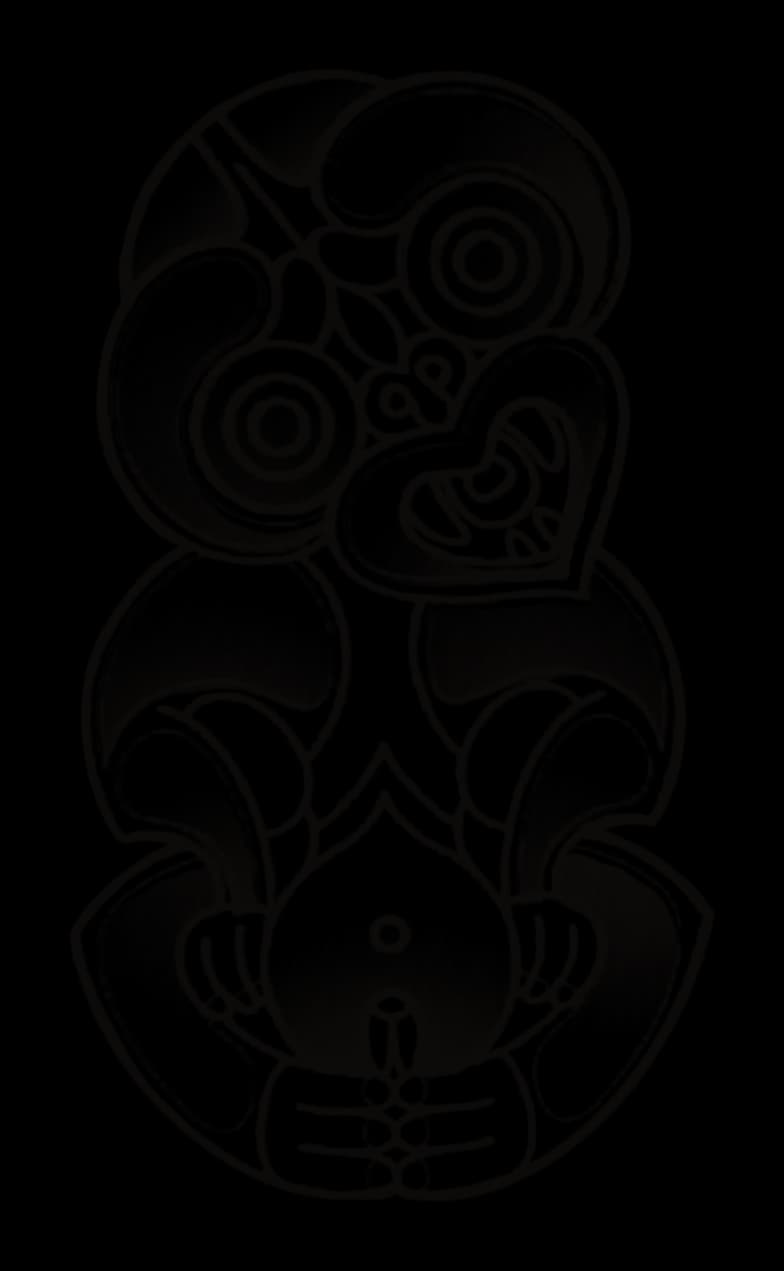

None of these drawings gets tattooed as it is. They're the starting point: in the consultation the motif is adapted to your anatomy and to the rest of the piece.
§ Meaning
Ancestor, guardian, the first man.
In Māori tradition, Tiki is the first man; similar figures appear on other Polynesian islands. By extension, tiki figures stand for the ancestors, hence the reading as a guardian: it's drawn face-on, eyes wide open, keeping watch.
In Marquesan tattooing (patutiki) the tiki face is one of the most characteristic motifs and usually holds a central place in the composition. In Aotearoa it also lives on as a carved pendant, the hei tiki, handed down within a family.
It's a demanding motif: it needs surface and symmetry. Placed in the wrong spot or made too small, it loses the stare — which is precisely what makes it work.
§ How it's drawn
A frontal face with large eyes, a broad nose and an open mouth, sometimes with the tongue out. In my designs it appears as a standalone mask, as a hei tiki pendant, inside a turtle shell or as a vertical band running down the arm.
Interested in a piece with this symbol?
In the consultation we work out how it fits your body and your story.
Book a consultation →