

§ About me
Leo
Martínez.
One of the few tattoo artists in Catalonia specialising in Polynesian tribal, Māori and Samoan. Born in Buenos Aires, 25 years tattooing, and since 2017 working from my own private studio in Granollers.
§ 01 · My story
I was born in Buenos Aires in 1979.
- 2003Buenos Aires → Barcelona
Crossing the Atlantic
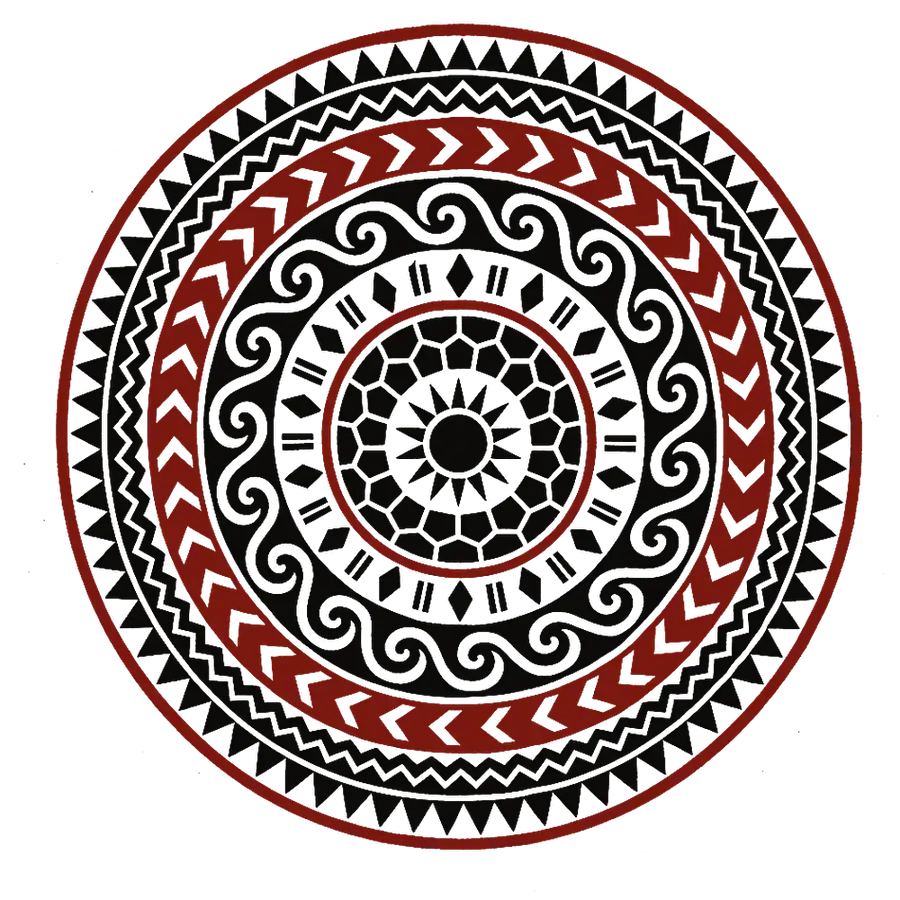
I leave my native Buenos Aires in 2003, already two or three years into tattooing, and settle in Barcelona. This is where I build my career as a tattoo artist, learning from many artists around me who gave me a great deal, generously. I start out tattooing everything, but with a strong connection to old school, which I still develop to this day. Over time I cross paths with Māori and Polynesian style, and it captivates me. From 2008 I start studying it, buying books and immersing myself in the culture.
- 2003 — todaySpain · Romania · Germany · Norway
Conventions
I visited many international conventions as a spectator, until in 2005 I took part in Castellón for the first time. From then on I did many over the years in Spain: Valencia, Castellón, Zaragoza, Seville, Málaga… and some abroad, like Bucharest (Romania), Berlin (Germany) or Bergen (Norway). These days I do one or two a year, as a way to keep meeting friends and discovering good artists.
- 2008Barcelona · Castellón · Netherlands
On the road again
A hard year worldwide: the crisis hits much of the world and pushes me into certain decisions, like leaving a studio I'd belonged to for many years and travelling again. I worked three days a week in Barcelona and two in Castellón, until I had the chance to settle for a short time in the Netherlands. The great experience! There I shared a shop with Bonel, a great tattoo artist and an even better person. He gave me a lot and pushed me to develop this style, seeing it came easily to me: I'd done plenty of it by then, but I wasn't studying it as I should. Years of deep study follow, of the body's lines and of how to set down, harmoniously, all the ideas going round my head.
- 2017Agustí Vinyamata, 1-3 · Granollers
Founding A Sailor's Grave Tattoo Barcelona
After years of travelling for work, mostly around Italy and Spain, I decide to open my own studio, a private one, where I can give clients better attention on large projects. I started alone, and little by little talented friends have joined to collaborate and add to this experience, which means doing things properly, with artistic and ethical judgement.
- 2017 — todayCatalonia · Spain
Still going out to work
Even with my own studio, I've kept working with renowned studios for many years. Crossing paths with other artists and other styles stops me getting comfortable.
- 2026Tattoo Love
Interview with David Llatje
We talked about the craft, about trends, and about why old school has no expiry date. The conversation drifted, as it almost always does, towards Polynesian.
«I'm not in a rush. This is a craft.»
Tattoo Love #70 interview · April 2026

§ 02 · How I work
I design each piece
on your body.
01 — Before touching the machine
I ask for the area. I touch it with my finger and note how the anatomy moves when you breathe. Then I draw, freehand, directly on the skin. If I do use a stencil, it's from something I drew beforehand to your measurements, to speed up the work.
02 — The symbolism, together
If you want a Polynesian piece, we first talk about what you want it to say: a birth, a journey, a loss, a sense of belonging. Then I look for the symbols that say that: not the most striking ones, the ones that fit.
03 — Fusion with judgement
I tattoo Polynesian tribal, Māori and Samoan, and I usually fuse them respectfully: an aesthetic that honours the traditional while adapting it to today's times and techniques.
04 — I study your anatomy
I study your anatomy to work out how to bring your idea to life. I care more about the piece making sense than about it being spectacular: if what you ask for doesn't suit your body, I'll tell you.
§ 03 · Where all this happens
See the studio in depth →


§ 04 · Heritage
The tradition isn't mine to have invented.
The vocabulary I work with is centuries old and it didn't come out of my head: it comes from a culture I study and respect. What is mine is the design that comes out of it, and that is new every time: drawn on your body, and repeated on nobody else.
I've been studying this style since 2008: buying books, reading and immersing myself in the culture behind every line.
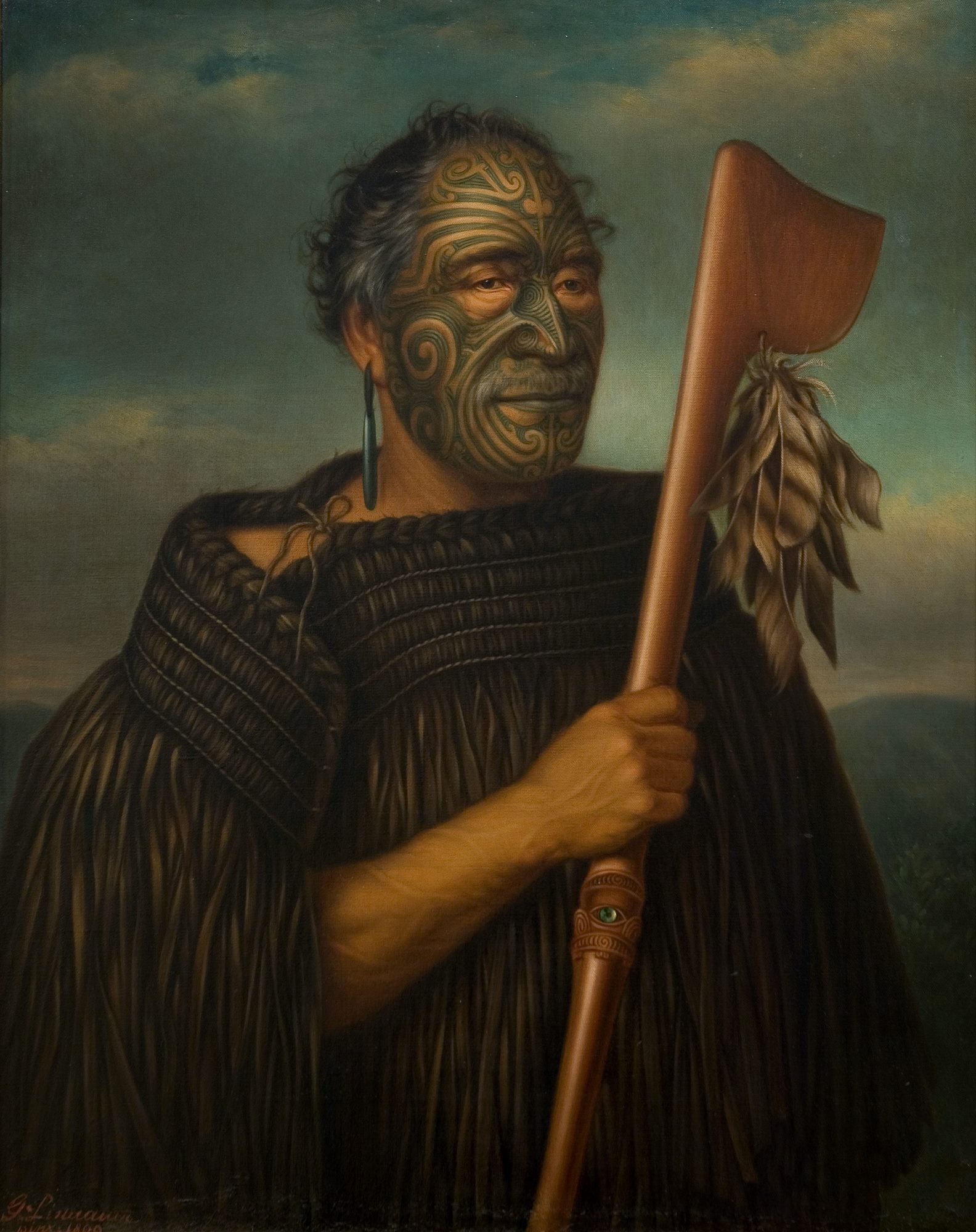
This painting, by Gottfried Lindauer in 1890, portrays Tamati Waka Nene, a Māori rangatira (chief).
§ 05 · Let's talk
Want a piece?
Tell me where you'd like to start. I reply personally, no filters, within 24-48 working hours.